Thursday, December 22, 2011

Gabii Project at the 2012 AIA meetings

The Gabii Project will be well represented at the upcoming meetings of the Archaeological Institute of America to be held in Philadelphia, Pennsylvania. The AIA will convene January 6-8, 2012, at the Philadelphia Marriott Downtown (1201 Market Street · Philadelphia, Pennsylvania 19107 USA). 

The following Gabii Project presentations are planned:
  • Friday, January 6, 2012, 11:00 AM - 3:00 PM. Rachel OpitzAnna GalloneMarcello Mogetta, and Nicola Terrenato. "The Gabii Project: the 2011 season" in AIA Poster session 2J 
  • Sunday, January 8, 2012, 8:30 AM - 11:30 AMAnna Gallone. "The Use of Lead in Central Italian Funerary Contexts: The New Evidence from Gabii" in Paper session 7B (Roman Funerary Images and Ritual) 
Also on Friday, January 6, material related to the Gabii Project will be presented in a colloquium session focused on 'Comparative Urbanism in the Ancient Mediterranean World.' In that session, organized by Jeffrey Becker and Jamie Sewell, material relevant to Gabii will be part of papers by Becker ("Storied pasts? Archaic and Republican Urbanism Compared"), Marcello Mogetta ("Urban Villages: Comparing Iron Age Settlement Structure in Greece and Italy") and in the discussion offered and moderated by Nicola Terrenato.

We hope to see many of our Gabii Project friends and alums in Philadelphia!

Wednesday, November 2, 2011

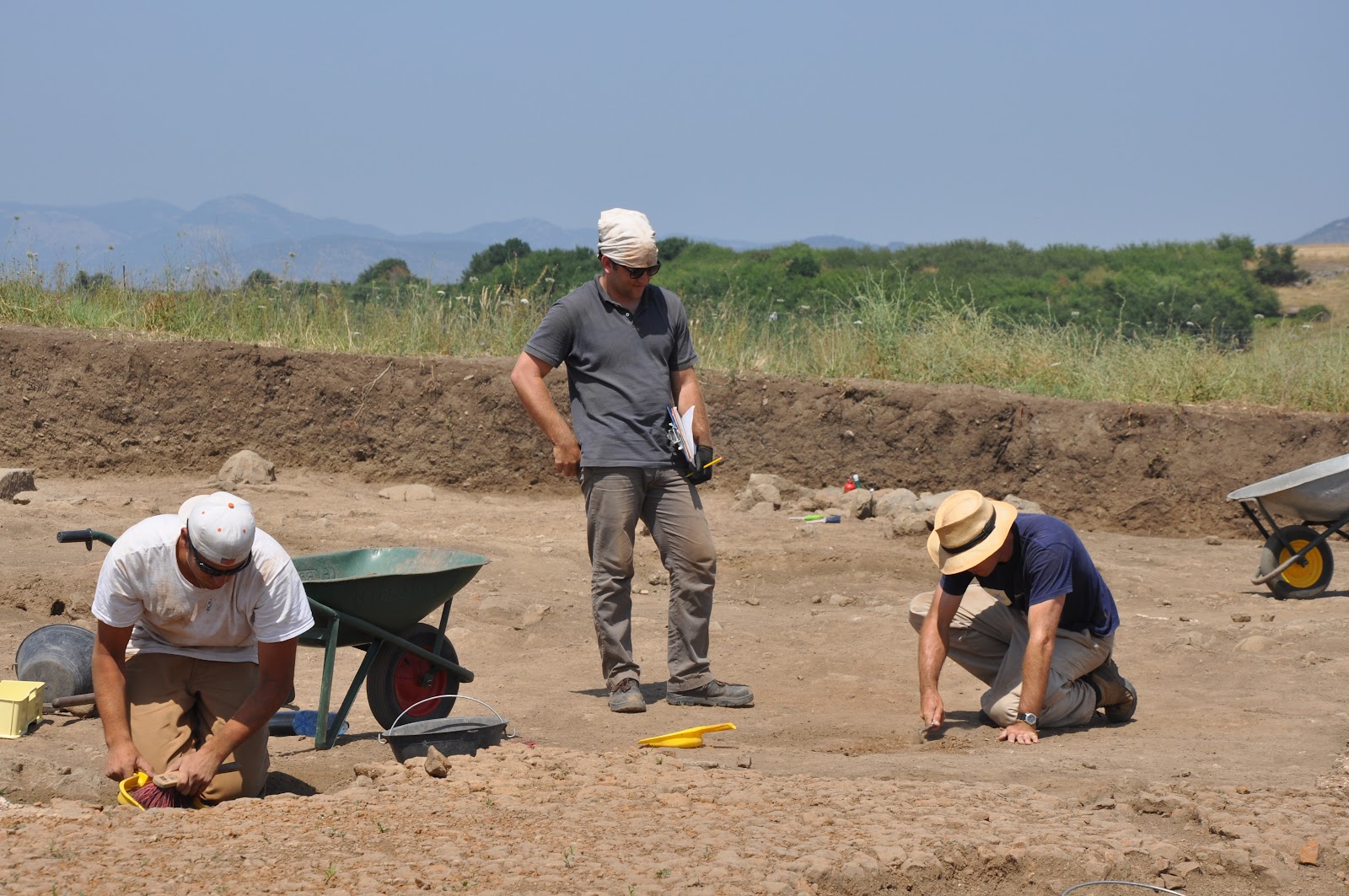
Gabii Project announces its 2012 volunteer field program

Gabii Project 2011 team photo
The Gabii Project will offer a field program for students and volunteers in 2012; the program will run from June 24 until July 28, 2012.  Applications will be accepted online via the project's website and the deadline for applying to the program is February 28, 2012; all qualified students are eligible to apply, not just those associated with the University of Michigan. Notifications of acceptance will be made by March 16, 2012, and accepted volunteers must submit their payment in full by April 2, 2012, in order to secure their spot. No volunteer may participate in the program if the program fee has not been settled in full.  The cost for the 5-week program, inclusive of accommodation in Rome, Italy, insurance, equipment, and local transportation, will be $3,600 (USD) in 2012. At this time the possibility of receiving academic credit for participation in the field program is still being negotiated. A final decision will be reached before the application deadline. A credit option might involve an additional fee.

In order to apply
  1. Please complete the online application form. Please complete all required fields.  
  2. Then, please be sure to ask two professional recommenders (who know you either from an academic setting or a prior fieldwork experience) to send letters on your behalf to Dr. Jeffrey Becker (gabiiproject-at-umich.edu - replace at with @) not later than February 28, 2012.

Travel
  • Volunteers are responsible for covering their own travel costs to and from Italy.
  • The point of arrival is Rome, Italy. Rome is served by two airports that handle international traffic. These are Leonardo da Vinci airport, also known as Fiumicino (FCO), and Ciampino airport (CIA) [also known as Aeroporto di Roma-Ciampino or Giovan Battista Pastine Airport].  Fiumicino handles long-haul international flights while Ciampino tends to receive short-haul, EU zone carriers.
  • The arrival packet distributed to confirmed volunteers will include specific arrival information and information and logistical details. 
Accommodation in Rome, Italy
    Accent International residence
  • The team will be accommodated in Rome’s Trastevere neighborhood in dormitory/apartments provided and administered by the study abroad firm Accent International.
  • Student accommodations have two to four bedrooms with one to two bathrooms per residence.
  • All accommodations have been renovated recently and include common area, kitchen facilities, refrigerator, washing machine, television, and wireless internet. On-site 24-hour/7-days-a-week logistical support is also included.
  • Team members will also have access to a study center / business center operated by Accent International.
  • The program fee covers the cost of lunch (Monday-Friday), but not other meals which are self-catering.


 Work and instruction on-site at Gabii
  • Volunteers will work on-site Monday through Friday, usually arriving on-site by 7.30am. Prospective applicants should note that this is a labor-intensive program and be aware that working long hours in the hot sun is to be expected.  Average daytime temperatures will be in the range of 90˚ F or higher.
  • Applicants must be in good health, have passed a recent physical examination, and provide up-to-date records of current inoculations.
  • Volunteers will work in small teams supervised by experienced excavators.  Additionally, the field program will expose participants to all facets of fieldwork, including working with ceramics and other archaeological materials, environmental sampling, flotation, topography, conservation, and documentation.  A regular rotation will be established for field program participants.
  • Regular site tours (usually once every 7 to 10 days) will help keep all team members up to speed on the progress of excavation work in the various areas of the site.
  • Several optional weekend outings will be arranged where guided tours will be offered by staff members.  In past years weekend trips have included the Forum Romanum and Palatine Hill as well as Ostia Antica.
2011 volunteers at Ostia Antica
Atmosphere and Experience
  • The Gabii Project is a large team (50+ people) effort.  Teamwork is the key to our success, but the working conditions can be intense.  The successful applicant will be ready to work as part of a large team and welcome the opportunity to work and learn cooperatively.
  • The combined experience of the Gabii Project’s multi-national staff offers volunteers the opportunities to learn and practice some of the latest and most cutting edge techniques of field archaeology.  Additionally, an excellent staff to student ratio guarantees close instruction in field methodology. 
For University of Michigan Students
  • You may be eligible for financial aid via the University of Michigan.
  • You may be eligible for University of Michigan credit by enrolling for a fall 2012 independent study with Professor Nicola Terrenato. Contact Marcello Mogetta with your questions.
A note on funding

Students accepted for the field program are encouraged to seek outside funding sources to support their participation as the Gabii Project does not offer need-based financial support. Possible sources include one's home department or institution, as well as various competitive fieldwork fellowships like those administered by the Archaeological Institute of America and the Etruscan Foundation.
Trench tours on-site in 2011

Need more information?

Please contact Dr. Jeffrey Becker via email.


Download the .pdf version of the field program flyer.

Wednesday, October 26, 2011

New Gabii Project publications: infant tombs and a new Latin inscription

Two new articles related to the Gabii Project's work have appeared this fall.

  • David Potter and Benjamin Fortson. 2011. "A Fragmentary Early Republican Public Inscription from Gabii." Zeitschrift für Papyrologie und Epigraphik (ZPE) 178:255ff.
  • Jeffrey A. Becker and Jessica Nowlin. 2011. "Orientalizing infant burials from Gabii, Italy." BABESCH 86:29-37.

Tuesday, August 16, 2011

End of the 2011 campaign

The sixth week of the Gabii field season was busy to the point of being frantic - thus the delay in getting this post up on the web. The week was one of finishing up various projects and beginning the process of finalizing the documentation of the 2011 excavations. We were undaunted by some mid-week rain and finished in fine fashion. Our final Friday was marked by a party in Frascati and the bulk of the team departed the following morning.

The archaeological picture at Gabii continues to become ever more complex. At this stage our team has explored parts of four city blocks and, in so doing, exposed multiple phases of the city's long and varied life. A huge revelation, so to speak, from the 2011 season has been the emergence of substantial architectural remains from multiple periods of the city's life. The Republican phases of the city are increasingly well-represented as we are beginning to see the presence of structures that were occupied in phase with the quasi-orthogonal grid of the Republican city. At this stage the project has explored parts of three side streets of that grid. The city's contraction, influenced in large part by the quarrying of lapis Gabinus involves the gradual abandonment of these city blocks and the subsequent collapse of the vacant buildings. At the southwest of our excavation area an Imperial necropolis emerged which has produced the lead "burrito" sarcophagus (2009) and now over 30 additional tombs of the Imperial period. The city's story is a rich one and a pleasant challenge to unravel.

The 2011 Gabii Project team

Nicola Terrenaton on-site during the final site tour of 2011.

Nicola Terrenato, the project's director, was pleased to announce on July 29th that the National Endowment for the Humanities (NEH) had awarded him a 3-year collaborative research grant to support the project's research from 2012.

The final week on-site saw a core group of staff members working to complete documentation, finds recording, and end-of-season break down and storage of equipment and supplies. We completed a second round of aerial photography and also backfilled parts of the site - some permanently, others temporarily. Now that the team and staff have returned to their various countries (and continents) we begin the post-excavation process for the 2011 material and the planning process for the 2012 field season. See you in this space soon ...

The project is enormously thankful to its staff, students, and friends (thanks, Sandro!!) for a fantastic and productive 2011 season.


Our die hard staff.


Sunday, July 24, 2011

Week 5 - helicopters, radar, and X-rays (oh my!) ...

The fifth week of our 2011 field campaign was abuzz with activity. In addition to our ongoing excavations in the ancient city of Gabii, the project continues to collect data by additional means. As in past years, we carried out a pass of aerial photography on-site via helicopter (thanks to Sgr. Italo Marini of the Fly Roma School) in order to see our work from a different angle. The utility of aerial photography in archaeology has long been proven and, in the case of urban sites such as Gabii, it is especially useful for recognizing alignments and orientations within the site. Happily, thanks to our surveying capabilities the aerial photographs can be orthorectified and incorporated into the Gabii GIS - super exciting!

Our intrepid field director Anna Gallone on the helicopter mission to take aerial photos of Gabii.
Our technological saturation only increased as the week went on as we were happy to benefit from the presence of specialist colleagues from Roma Tre University and Davidson College, respectively. From Roma Tre we welcomed Professor Elena Pettinelli and her team from the physics department who this week began additional tests using ground penetrating radar (GPR) at Gabii. This geophysical technique recognizes archaeology and geologic features by creating subsurface radar profiles and our project is beginning to test the effectiveness of GPR at Gabii as a guide to better understanding the site. Our physics colleagues were even generous enough to come out to Frascati and talk to our group about physics and its applications for archaeology.   


Elena Pettinelli from Roma Tre University.

We were also happy to welcome Prof. Ruth Beeston from the Chemistry Department at Davidson College in North Carolina. In conjunction with Hilary Becker, Ruth was in Italy to carry out XRF testing in the lab of the University of Michigan / University of Calabria project in the Area Sacra di Sant'Omobono in Rome and she was generous enough to come to Gabii with her XRF equipment. The handheld XRF equipment is used for conducting elemental analyses and Ruth's day of testing at Gabii included samples of human bones along with other specimens, including geologic ones. Adding XRF testing to our arsenal of investigative strategies is a boon to the research agenda of the Gabii Project.

Ruth Beeston and Austin Raymond in the lab at Gabii.

Davidson College crew at Gabii: Will Milvaney, Hilary Becker, Austin Raymond, and Ruth Beeston.

With all of this flying, zapping, and radar-ing, we would be remiss if we did not mention the excellent progress made in terms of excavation at Gabii. Our teams continued to make progress in all of our excavation areas, something that was evident to all of our visitors this week, including the local inspector of the archaeological service. As we move on to the sixth, and final, week of the 2011 campaign we continue to derive great excitement from our students and sharing with them the process of discovery at Gabii. 


Sunday, July 17, 2011

Fourth week at Gabii

A pattern of oppressive heat and humidity gave way after mid-week and we finished this, our fourth week of the 2011 campaign, under beautiful skies at Gabii. Gabii Project veterans continue to marvel at Gabii's unique weather patterns, seemingly still influenced by the crater lake of Castiglione, although the lake was drained a long time ago. The winds helped to make the temperatures lovely for fieldwork - although the occasional blown paperwork or silt in the eye was a downside to the windy weather. In terms of archaeology, we had a productive week. In Area C we continued to delimit a Republican structure and in Area E a lot of hard work cleaning top soil and colluvium is starting to reveal interesting and promising wall features, in addition to more evidence for Gabii's street system. Elsewhere on the site we continue to work to complete the excavation of a structure in our Area B as well as to document and model various features, including digital tomb modeling. Our lecture program this week included presentations by Hilary Becker (Davidson College) on the inland economy of ancient Italy and by Ruth Beeston (Davidson College) on XRF and chemical applications in archaeology. Mid-week we were invited to visit the excavations of our 'neighbor' Marco Fabbri who is working at the site of an archaic building on the rim of the crater of Castiglione. To top off a great week, a number of the team joined Jeffrey Becker and Hilary Becker for a visit to the ruins of Ostia Antica on Saturday. All enjoyed a fun day walking and talking amidst the ruins. As we move on to the fifth week of this year's campaign, we look forward to what is sure to be an exciting new round of discoveries. The project also joined Google+ this week, so come join our circle(s)!


Austin Raymond (Davidson College).

Evan Goldstick (Michigan), Samuel Palumbo (Bryn Mawr) work with supervisor Jamie Sewell.

Ruth Beeston talks about chemistry and archaeology.


Part of our group at the sanctuary of Attis in the Campus of the Magna Mater. (l to r, starting with back row: Brandon Tomasso, Jacob Kovacs-Goodman, Evan Levine, Sheira Cohen, Jonathan Flynn, Julia Reilly, Aida Ali, Jackson Vaughn, Tim Hart, Ruth Beeston, Michael Beeston, Hilary Becker, Austin Raymond, Evan Goldstick, Nick Bartos, Christina Cha, Ilana Hill, Zoe Fox, Lauren Coughlin.

Part of our group at the Capitolium. (l to r, starting with back row: AJ Chrapliwy, Jackson Vaughn, Sam Palumbo, Evan Goldstick, Amanda Swango, Tim Hart, Austin Raymond, Sheira Cohen, Jeffrey Becker, Jacob Kovacs-Goodman, Brandon Tomasso, Sophia Staley, Laura Steitz, Carrie Wallace, Lauren Coughlin, Jonathan Flynn, Nick Bartos, Julia Reilly, Zoe Fox, Alison Rittershaus, Aida Ali, Ilana Hill, Christina Cha, Evan Levine.


Sunday, July 10, 2011

Gabines on the Ianiculum?

Yes, it can happen - a geographic convergence of sorts, Gabines coming to the hills of Rome. This was the case on the evening of Saturday, July 9, 2011, when the American Academy in Rome and the University of Michigan's Office of Development hosted a reception for friends of the Gabii Project in the Academy's Bass Garden. Welcoming the group were project director Nicola Terrenato, Brodie Remington from the Office of Development, and T. Corey Brennan, the Andrew W. Mellon Professor-in-Charge of the School of Classical Studies at the American Academy. The welcome highlighted the strengths of the University of Michigan and its tradition of Roman studies and Classical archaeology, as well as the ties between the two institutions. After a discussion in the garden about the aims of the Gabii Project, the group adjourned to the Casa Rustica on the Academy's grounds for a visit with the lead sarcophagus excavated at Gabii in 2009. It was a lovely evening - with perfect weather - and the Gabii Project is grateful to its friends and supporters for coming out to share in both a lovely evening in Rome and in our fieldwork outcomes.